
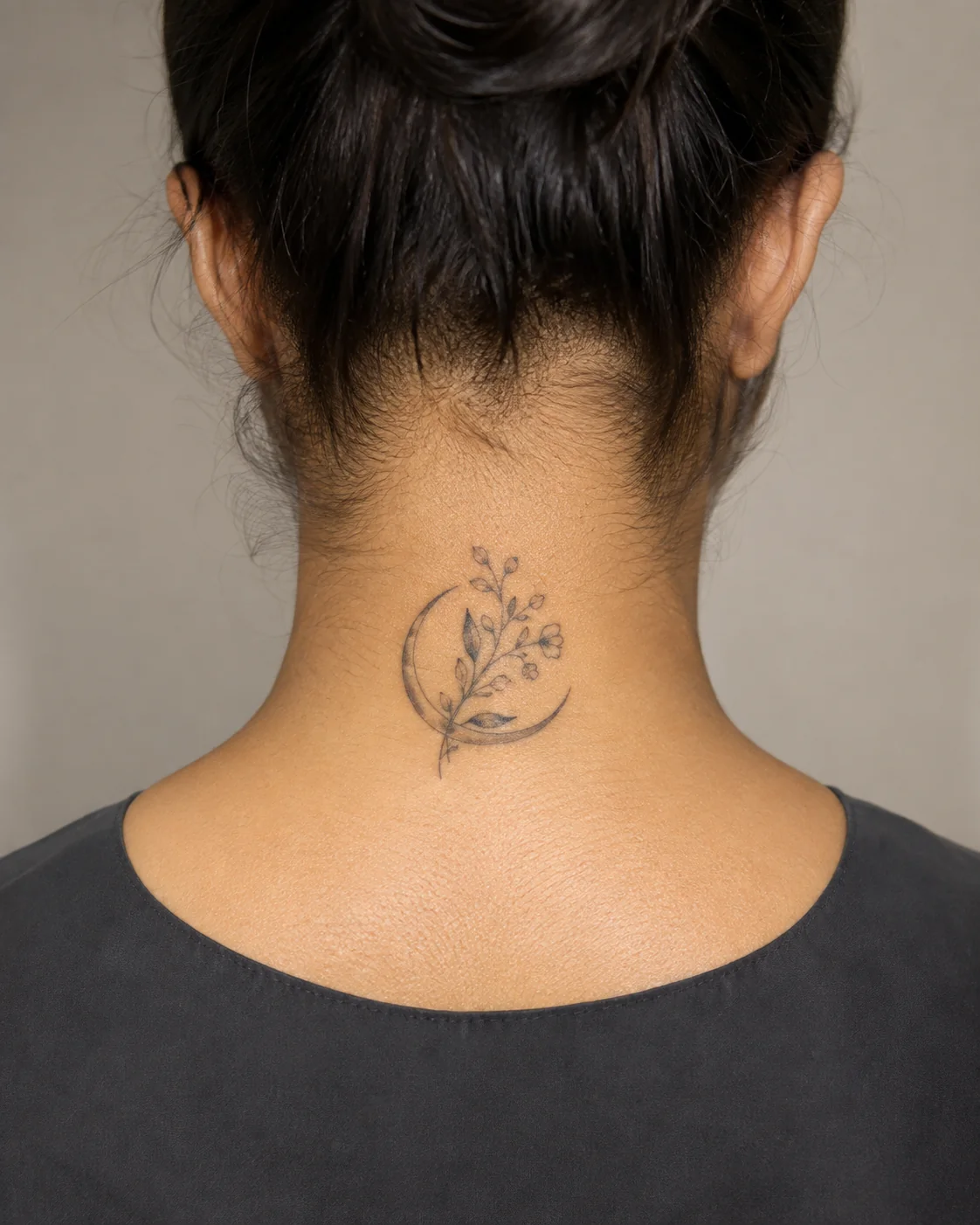
Laser Tattoo Removal for Women
A tattoo that no longer suits your situation? Removal is possible — and these are its realistic conditions.
Dr Nabiha Ahmed El-Sharnouby, consultant dermatologist and aesthetic physician, personally performs tattoo removal sessions using the Spectra Q-switched laser.
The number of sessions and the final result depend on the ink's colour, depth and age — and are only determined after a direct visual assessment.
What is the problem?
Tattoo ink is injected beneath the skin's surface layer, which is why it does not fade with exfoliation or creams no matter how long you wait.
The recurring reasons: a change of conviction · an old tattoo whose edges have spread · a job or occasion that requires it not to show · or wanting to cover it with a new tattoo, which first requires lightening it.
How does the Q-switched laser work?
An extremely short pulse of light breaks the ink particles beneath the skin into fine fragments, which the body clears gradually over the following weeks.
Dark colours such as black and dark blue absorb a wider range of wavelengths and respond better, while green and light blue need a different wavelength and may respond more slowly.
This is why the number of sessions and the final result are only set after the ink's colour and depth are assessed at the first visit — never before.
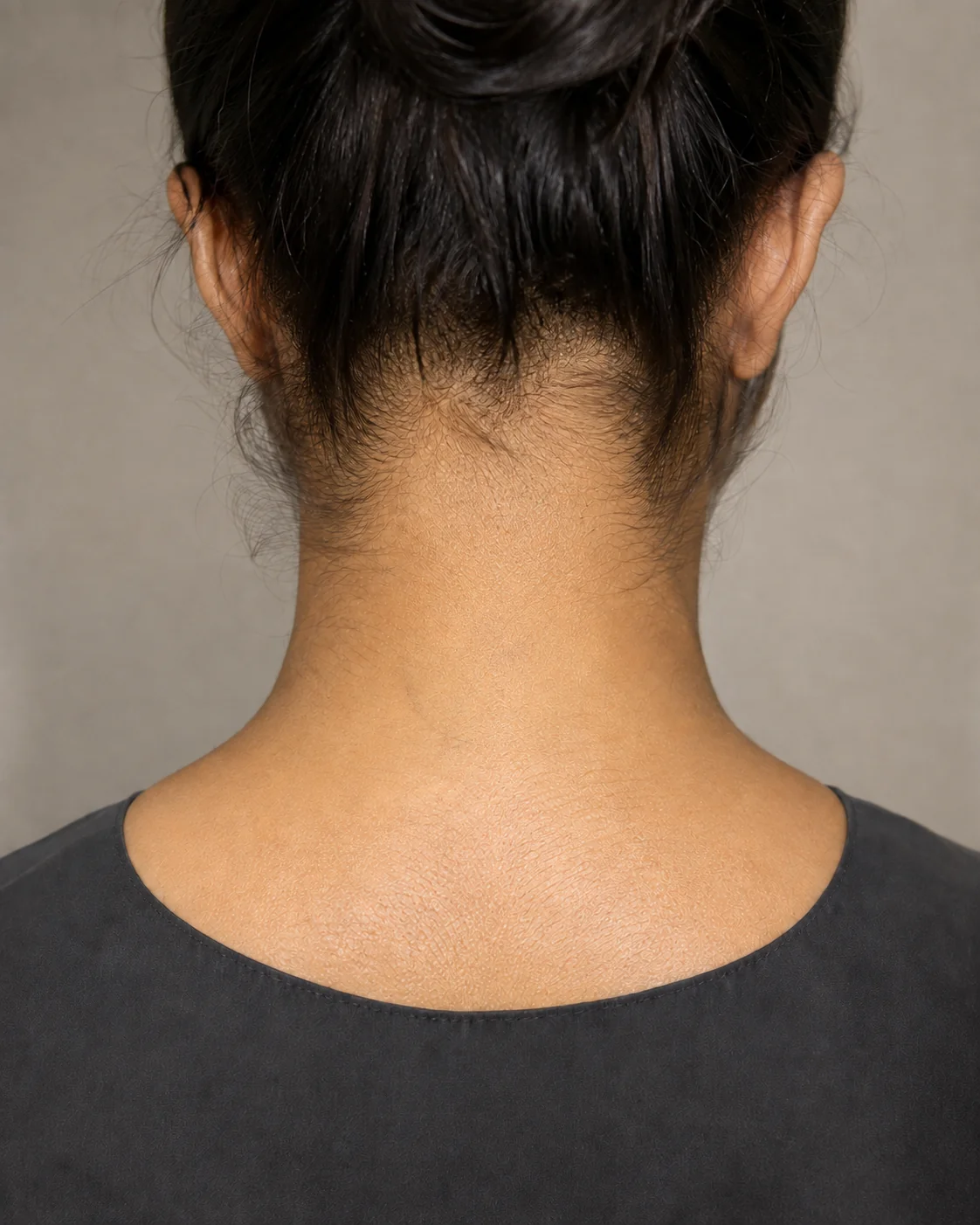
What we tell you before you pay
Some colours — green and light blue especially — fade gradually and do not fully disappear in every case, and we say so at the assessment appointment, not after you have paid for sessions.
We do not promise a fixed session count before seeing the tattoo; the count is estimated after assessment and varies from one tattoo to another.
The interval between sessions is set by the doctor and is not shortened, because the body needs time to clear the broken-down ink.
When we postpone the session
- Pregnancy — tattoo removal sessions are not performed during pregnancy.
- Keloid-prone skin needs a specific assessment before starting.
- Active skin infection over the tattoo site — the session is postponed until it heals.
What we do not offer — said before you ask

We do not promise complete removal for every ink colour; some pigments only fade and do not fully disappear, and we say this at assessment, not after payment.
We do not quote a fixed session count before seeing the tattoo, its colour and its depth.
In these cases we explain the realistic outcome for your specific tattoo, rather than a generic number that does not hold for every case.
Questions and answers
Questions women repeatedly ask about laser tattoo removal at Hokamaa Najd.
It depends on the ink's colour, depth and the tattoo's size, and is estimated after the first assessment. The usual range is 5 to 10 sessions.
The sensation is similar to a rubber band snapping. The area is cooled during the session, and local anaesthetic can be used if needed.
It depends on colour and depth. Black and dark blue respond well, while some lighter colours may fade without fully disappearing — we set the realistic expectation at assessment.
It is assessed before the session; your skin tone factors into the device settings to reduce the risk of a colour change in the skin.
Usually a few weeks, set by the doctor according to how your skin responds, since the body needs time to clear the broken-down ink.
Rare when aftercare instructions are followed, but the risk exists, especially in keloid-prone skin — which is why we assess your skin before starting.

Start with an assessment appointment — the tattoo's colour, depth and your skin tone are examined there.
Start an Assessment