
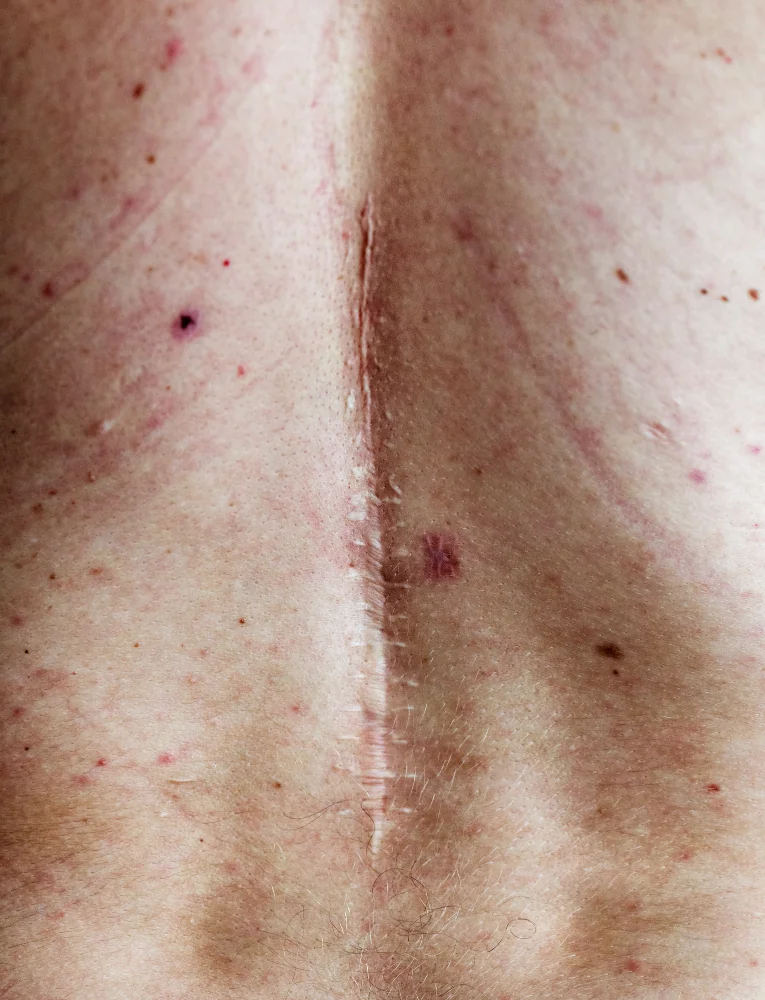
Surgical & Post-Op Scars
Timing determines safety — we don't start until the wound has fully healed.
Why does timing matter?
A scar goes through gradual stages of maturity after surgery, and treating it before those stages are complete can make it worse instead of better.
Some clients ask for a fractional or dermapen session just days after their operation, believing an early start is better — the truth is the opposite.
So we assess your surgery date and scar type first, then determine the safe time to start.
When starting is safe
We wait until the wound has fully closed, with no opening or discharge, before any session.
The usual minimum before starting is a few weeks, varying with the type and location of the surgery.
We assess the scar's colour, texture and height at the first visit to determine if it's ready for treatment.
We explain a realistic expectation for improvement — lightening and smoothing the texture, not necessarily erasing the scar completely.
We track how the scar responds between sessions and adjust the plan if needed.
What we don't offer — said before you start

We do not treat a scar that is still open, discharging or inflamed — we wait for it to fully heal first.
We do not promise complete erasure of raised or thick (keloid) scars with fractional laser alone — if your case needs a surgical intervention, we say so and refer you.
In these cases we explain that and set a plan that fits your actual circumstances, not a promise we cannot keep.
When a session is postponed
- The wound is still open or not fully healed.
- Signs of inflammation at the scar site — increasing redness, discharge or pain.
- Very recent surgery that hasn't had enough time to heal.
Questions and answers
Questions repeatedly asked about surgical scar treatment at Hokamaa Najd.
It varies with the type and location of the surgery, usually several weeks after the wound has fully closed — we set the right timing at your first visit.
Realistic improvement is a lighter colour and smoother texture, not necessarily complete erasure, especially with raised or deep scars.
A topical numbing cream is applied before fractional or dermapen sessions, and the sensation afterward is a mild sting with slight warmth.
It's determined after assessing the scar's type and age, and usually needs several spaced sessions to evaluate the response.
It needs a specific assessment before starting, and we may begin with a limited test session to observe how your skin responds first.
Yes, unprotected sun exposure after a session can darken the scar or slow its healing — sunscreen is required after every session.

Start with an assessment appointment — we determine whether your scar is ready for treatment and the safe time to start.
Start an Assessment