
Melasma and Pigmentation Treatment
We diagnose the type and depth of your pigmentation first — then choose what suits your case.
Why is melasma different?
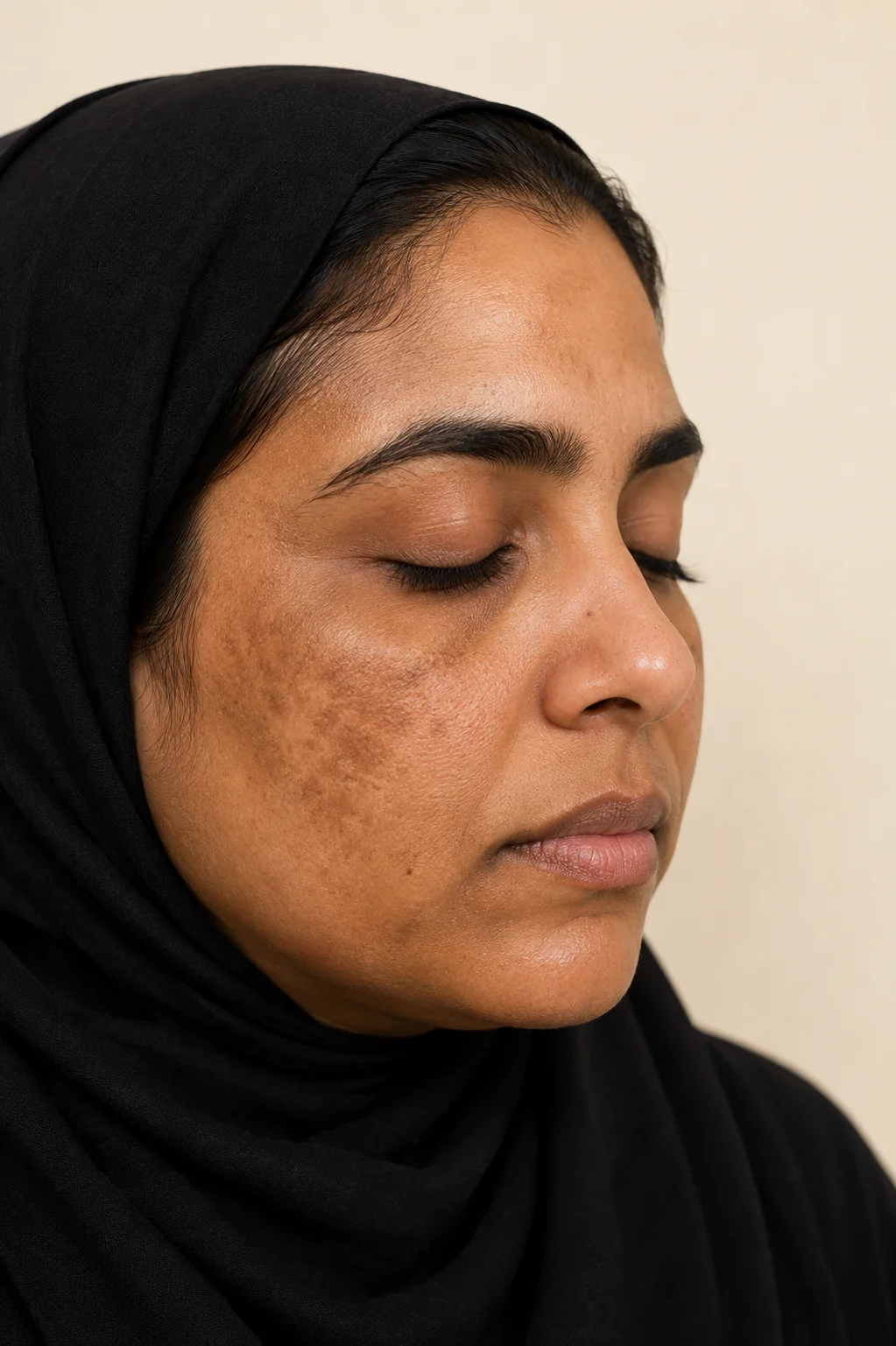
Melasma is a chronic condition linked to hormones (pregnancy, contraceptive pills, thyroid changes) and sun exposure together — not simply extra pigment from the sun the way an ordinary sun spot is.
It typically appears as symmetric patches on the cheeks, forehead and upper lip, tends to intensify with sun and heat, and can return even after successful treatment if the triggers behind it are still present.
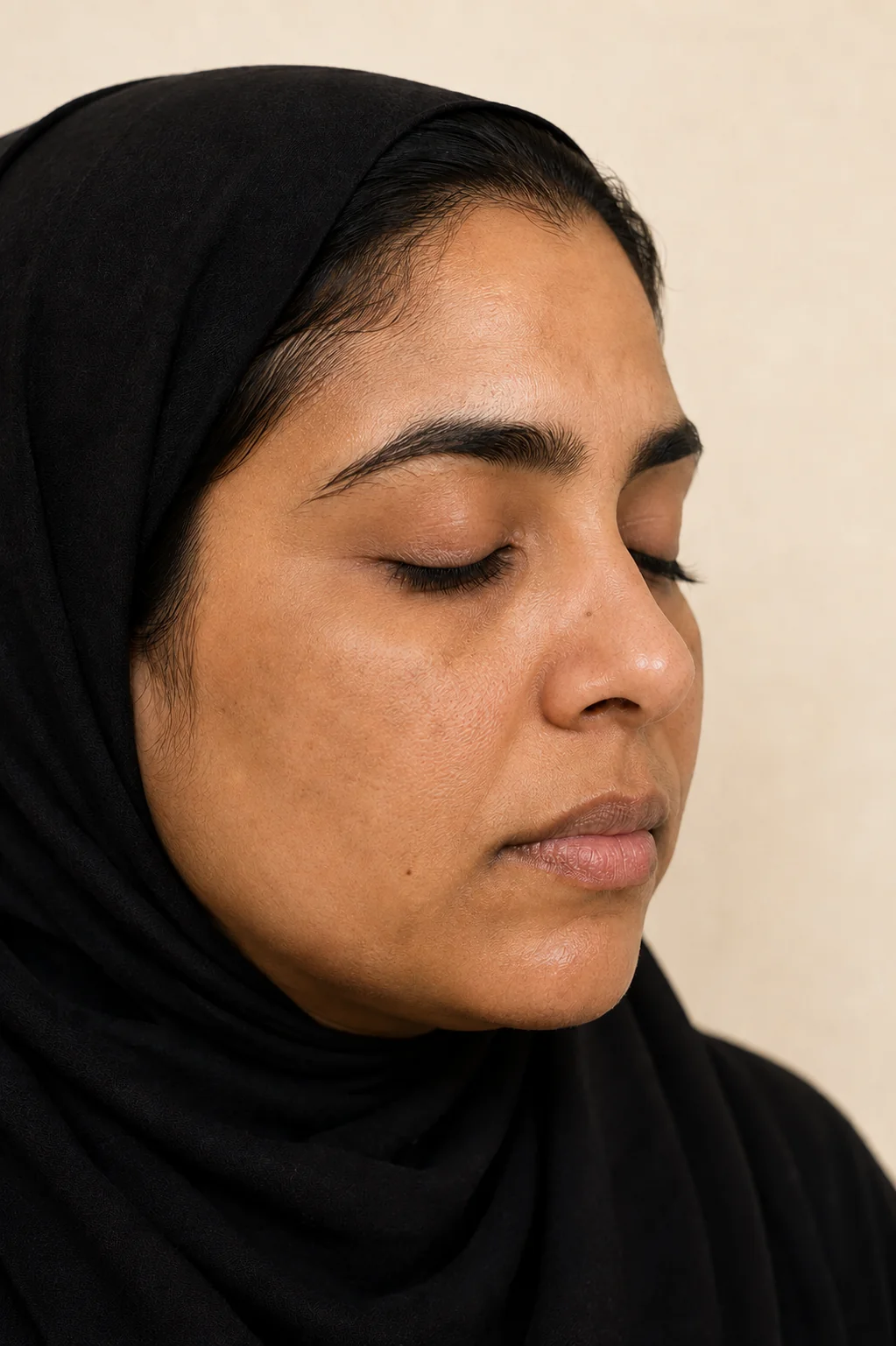
Because it has more than one cause, a single session or a single method rarely resolves it — realistic, ongoing management is the goal, not a quick fix.
Diagnosis first — before any session
Before choosing a method, we establish the depth and type of your pigmentation — epidermal, dermal or mixed — often with a Wood's lamp examination alongside a clinical assessment of your skin.
This determines whether cold peeling suits your case, or mesotherapy, or laser with Spectra, or a combination of these — and how aggressively treatment can safely proceed.
Skipping this step and going straight to a laser session risks making pigmentation worse rather than better, particularly with dermal or mixed melasma.
Before you start
Daily sunscreen with a high SPF, with no days skipped — treatment fails without it no matter how effective the session.
Avoiding direct sun and peak sun hours, even after your skin improves.
Telling us about any hormonal contraceptive or medication you are using, since some are known melasma triggers.
Patience with a multi-session plan — melasma does not respond to a single session, and improvement shows gradually.
Telling us if your melasma is linked to a current pregnancy or a medication you started recently.
When treatment is postponed
- Pregnancy or breastfeeding — certain peeling and laser sessions are postponed until this period ends, or replaced with a safe alternative.
- A recent tan or heavy sun exposure in the preceding days.
- Use of isotretinoin (an acne medication) within recent months.
What we don't offer — said before you start

We do not promise permanent removal of melasma in a fixed number of sessions — it responds in degrees and needs ongoing follow-up, and any promise otherwise would not be accurate.
We do not perform peeling or laser sessions on a pregnant or breastfeeding patient without medical clearance, regardless of how much she wants to move faster.
We are not a substitute for daily sunscreen — we say so plainly, and we will not sell sessions we know will fail without it.
In these situations we explain why and set a plan that fits your actual circumstances, not a promise we cannot keep.
Questions and answers
Questions repeatedly asked about melasma and pigmentation treatment at Hokamaa Najd.
It can return if the triggers behind it continue — unprotected sun exposure or a hormonal change. The realistic goal is control, not a guaranteed permanent removal.
Certain peeling and laser sessions are postponed during pregnancy and breastfeeding, and we suggest a safe alternative skincare plan until that period ends.
It depends on the type and depth of your melasma and how your skin responds, and is determined after diagnosis, not before. The plan is reviewed every few sessions.
It depends on the method chosen; cold peeling feels mild, while laser is a quick sting with simultaneous cooling.
Not always — in some skin tones, laser can make certain types of melasma worse, which is why we establish the type of melasma and your skin tone first, before choosing a device.
Sun spots are well-defined marks caused only by sun exposure and usually respond to a session or two. Melasma is hormonal, chronic, more widespread and often symmetric, and needs a different diagnosis and follow-up altogether.

Book an assessment appointment — we identify the type and depth of your melasma before choosing treatment.
Book an Assessment