
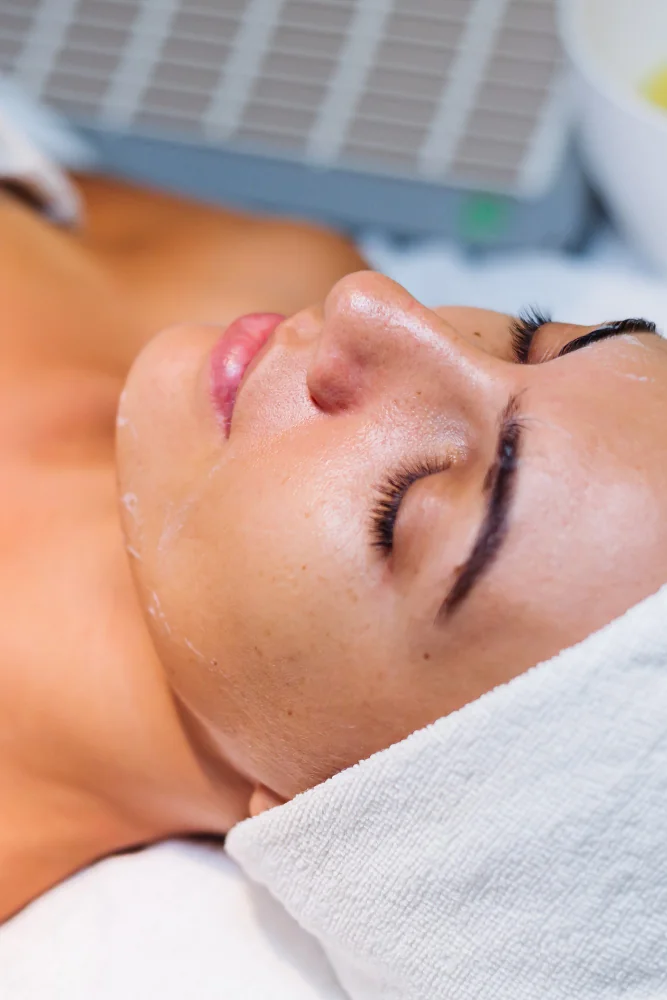
Cold Peeling
A gentle improvement in texture and radiance, with no long downtime — and we explain its limits from the start.
How is this different from the peel you've heard about?
Many people avoid peels out of fear of the heavy redness and long downtime associated with a strong classic chemical peel.
Cold peeling is a gentler version, designed for sensitive or darker skin, with no noticeable downtime or visible flaking.
But it isn't a substitute for every type of peel — we explain what it treats well and what needs a different method.
How it works
A peeling solution designed to work gently on the skin's surface layer is applied, with cooling that reduces irritation and the sensation of heat during the session.
It improves overall skin texture and eases mild dullness and superficial pigmentation, but does not reach deep pigmentation or noticeable scarring.
The result builds up across several spaced sessions, not an instant change from a single one.
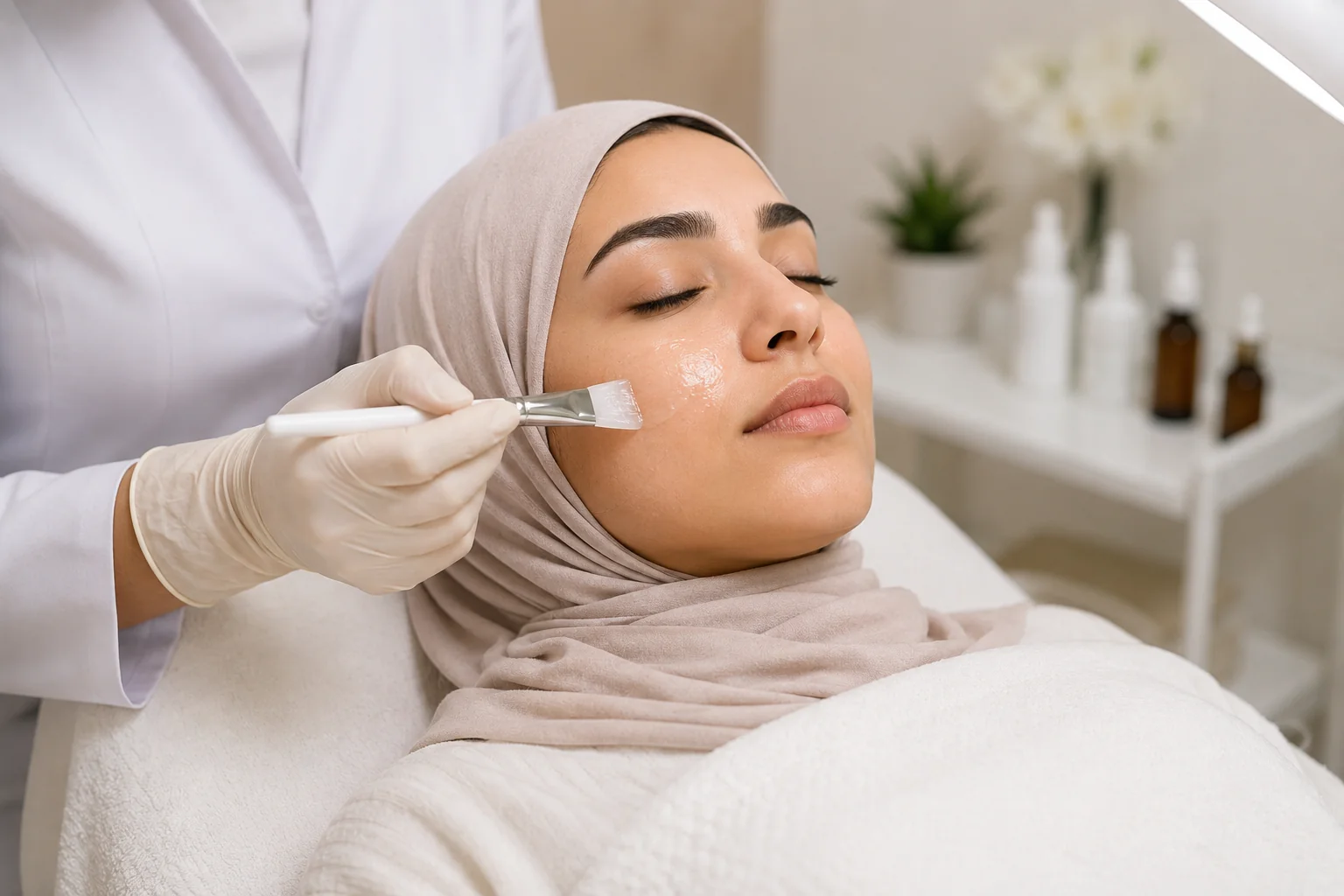
Before and after a session
Stop retinol exfoliants and strong acids a few days before the session, unless we tell you otherwise.
Avoid heavy sun exposure or tanning in the days before the session.
Tell us about any known skin sensitivities or products you are currently using.
After the session: a gentle moisturiser and sunscreen, and avoid strong exfoliants for a few days.
What we don't offer — said before you start

This is not a substitute for treating deep pigmentation or scarring — we refer you to the dedicated page for that if it's your case.
We do not offer a strong classic chemical peel under this name — that is a different, more intensive procedure, and we don't conflate the two.
If your case needs a stronger method, we say so clearly and refer you to the right option.
When a session is postponed
- Active skin inflammation or recent sunburn in the treatment area.
- Use of strong exfoliants or isotretinoin recently without telling us.
Questions and answers
Questions repeatedly asked about cold peeling at Hokamaa Najd.
Usually no noticeable downtime — mild redness may appear and fade within hours, and you can go about your day right after the session.
Cold peeling is gentler and less irritating, suited to sensitive or darker skin, while a classic peel is stronger and needs longer downtime.
A schedule is set after assessment, usually spaced sessions every few weeks so the result builds up gradually.
Yes, that's one of the main reasons it was designed this way — but we assess your skin first to set the right solution strength.
It improves mild surface texture, but deeper scars need fractional laser or dermapen — we point you to the right option after examination.
Avoid strong exfoliants and heavy sun exposure before the session, and stick to sunscreen and a gentle moisturiser afterward.

Start with an assessment appointment — we determine whether cold peeling is the right choice for your case.
Start an Assessment