
Prostatitis — Pain or Burning When Passing Urine
Pelvic pain and burning on urination — is it prostatitis?
What is the problem?
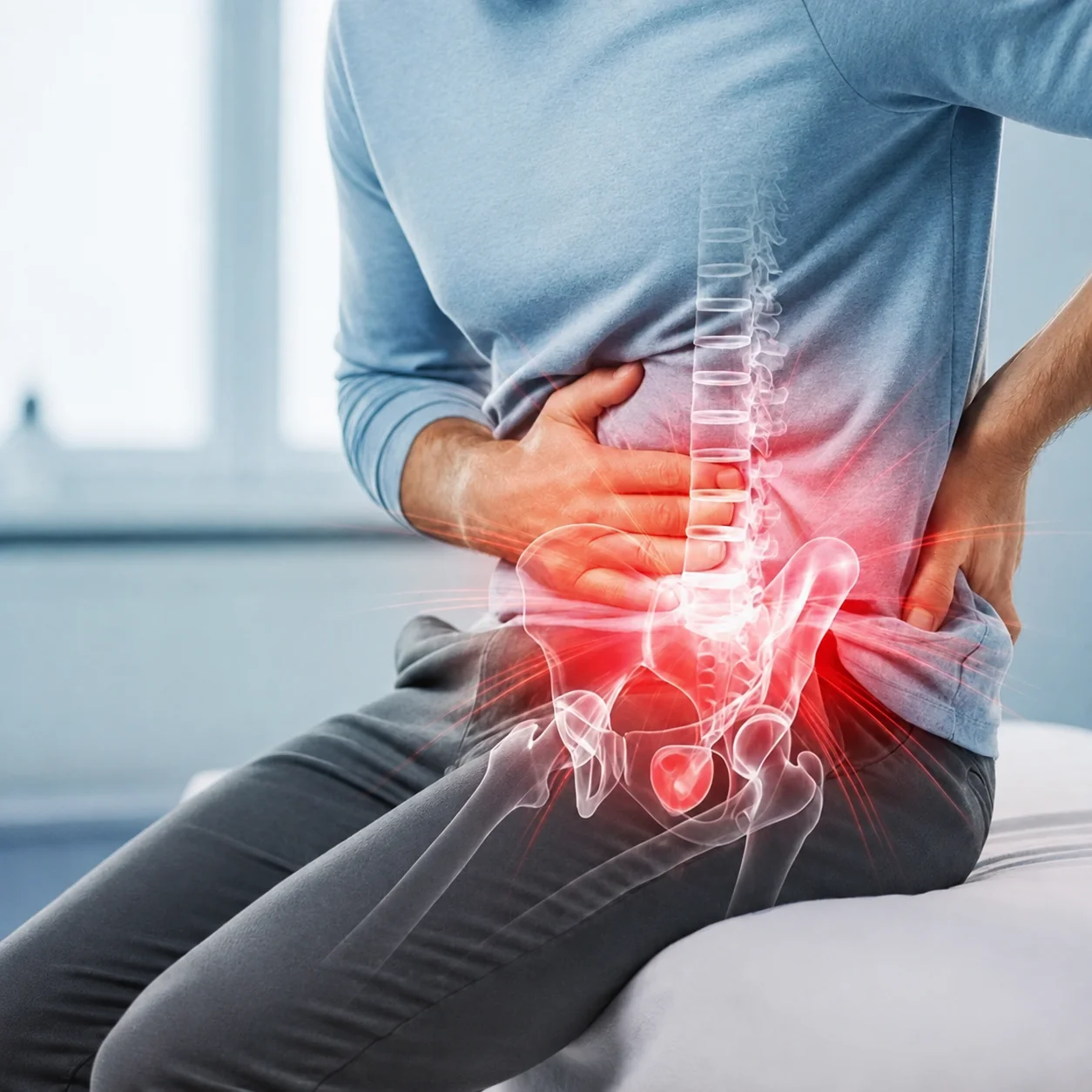
The prostate is a gland surrounding the urinary passage in men. When it becomes inflamed or irritated, pain and burning appear on passing urine, along with pain in the lower pelvic area — between the testicles and the anus — which may extend to the lower back or occur during and after ejaculation.
What matters is that prostatitis is not a single condition. There is acute inflammation caused by an identifiable organism, there is chronic inflammation, and there is another common condition in which no organism is present at all despite entirely identical symptoms.
The symptoms that bring men here
Pain or burning while passing urine.
Pain or heaviness in the lower pelvis, between the testicles and the anus.
Pain during or after ejaculation.
Frequent urination and an urge that is hard to postpone.
A weak or interrupted urine stream.
Pain extending to the lower back or upper thigh.
Why does this drag on for so many men?
Because the symptoms are similar and treatment begins with guesswork.
The usual path: an antibiotic, a slight improvement, then a return. Then another antibiotic, then a third. Months pass without a diagnosis because nobody asked the first question: is there actually an organism?
And the difference between the two changes the treatment entirely — and it is known only through examination and testing.
How we examine it here
We begin with the question that shortens the road: is the cause an organism or not? Then we measure the effect of the inflammation on urination itself.
- Clinical examination
- Examining the gland and locating the pain precisely — the basis for every subsequent step.
- Expressed prostatic secretions
- The decisive test — it shows whether an organism is present, and directs treatment rather than trialling it.
- Uroflowmetry
- Measures the effect of the inflammation on the urine stream and reveals any accompanying narrowing.
- Post-void residual
- How much urine remains after voiding — incomplete emptying prolongs the problem.
- Prostate volume measurement
- Distinguishes inflammation from enlargement, since the symptoms are close and the treatment differs.
Which tests are usually requested?
The tests here are not an extra step — they are what determines the type of condition:
- Urinalysis
- The first step — it reveals signs of inflammation and the presence of blood.
- Urine culture
- Identifies the organism and the treatment specific to it, rather than a broad antibiotic being trialled.
- Prostatic secretion analysis
- Distinguishes bacterial from non-bacterial inflammation — the distinction that saves months.
- Semen analysis
- Requested in selected cases, particularly with painful ejaculation or delayed conception.
- HbA1c
- Uncontrolled diabetes makes infections recur and slows the response.
- PSA blood test
- Requested according to age and case, and read with caution because inflammation itself can raise the figure temporarily.
Attend emergency care immediately if any of these occur
- A high temperature with shivering or rigors.
- Urine stopping completely with fullness and lower abdominal pain.
- Very severe, unbearable pelvic or lower back pain.
- Rapid deterioration in general condition over hours.

Dr Mohammed Shaker Hito
Consultant Urological and Genital Surgeon
Medical Director, Hokamaa Najd Medical Complex
More than forty years of experience in urological and genital surgery — he began practising the specialty in 1984.
Holds German accreditation in his specialty.
Oversees the centre's approved medical service list as Medical Director; it is signed in his name.
Performs the diagnostic investigations himself in the clinic: uroflowmetry, post-void residual, prostate volume, cystoscopy, Doppler and the erection study.
Follows the case from examination through reading the result to the plan — patients are not passed between different hands inside the clinic.
This experience is what explains the clinic's approach: four decades in the specialty teach that most of what gets treated by guesswork could have been settled by a single investigation at the outset.
Questions and answers
Questions frequently asked about prostatitis at the urology clinic at Hokamaa Najd.
In most cases no, and it is not a sexually transmitted disease. But a proportion of cases is linked to an organism, which is why it is investigated rather than assumed.
No. Inflammation is an entirely separate condition. But the symptoms can resemble other conditions, which is a further reason to investigate rather than to worry.
Because a large proportion of cases is not bacterial at all. An antibiotic in that situation treats nothing, and the solution begins with identifying the type of condition rather than changing the drug.
It can in some cases, which is why semen analysis is requested when delayed conception is part of the complaint.
Chronic pain and the anxiety accompanying it can contribute, and both conditions are assessed together in the same clinic.
It depends on the type of condition, and we do not promise a figure. What we do promise is that you will know precisely which type you have, so you start from a plan built on a diagnosis rather than on trial.

Book an examination appointment — we settle first whether an organism is present.
Book an Examination